
 JC
JC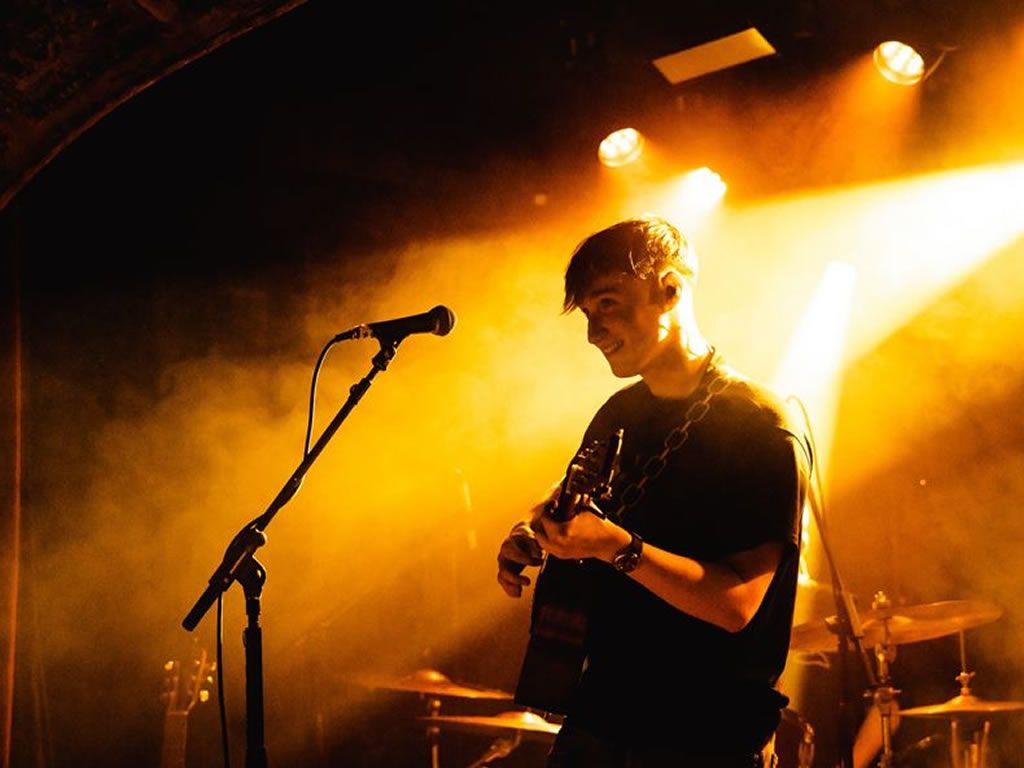
AS A-Level students, we need to demonstrate an understanding that texts can be interpreted in this way or that way, that one word could mean this but it also might mean that. Calum Bowie’s here to help us deal with the complicated process of unfolding language!
The first time I came across Calum Bowie was at Glastonbury Festival. He was the first act I saw that weekend and he played ‘Your Anthem’. The sun was shining and his lyrics fit the moment so perfectly. When I got home, I started listening to more of his music. Then, I scrolled through social media, expecting others to feel – as I did – that Bowie’s performance had set the perfect tone for a perfect few days. Actually, though, the ‘loudest’ of the comments I came across has been posted by someone who had been much less impressed than me. They thought the song was, in fact, too contrived. It was, this person suggested, trying too hard. I completely disagree. Bowie wasn’t simply promoting his own song as the one we should all choose to soundtrack the most unforgettable experience of our lives – rather, he was celebrating the songs that had served that purpose for him. Okay, yes, the outcome of his efforts was quite meta in the sense that in paying tribute to the songs he considered anthems, he had created his own, but that was a result to be celebrated not diminished. I still find it hard to believe that anyone standing in the spine-tingling warmth, at the indescribably beautiful Strummerville stage, that afternoon could have perceived the smiling Calum Bowie through such a cynical lens.
Maybe, then, the comments were left by some troll who hadn’t actually really been at Glastonbury. The Scottish singer’s set was utterly joyous (the TRNSMT set linked above will give you a sense of that fact) and it’s hard to think anyone could have felt differently. However – of nothing else – that little story does remind us that we can’t ever assume people are reading a situation the same way we are. Even when we feels things in a really absolute way, it remains very possible that the person next to us is having an utterly opposite reaction. This is something we need to keep in mind when studying for A-Level English Literature. We must show the examiner that our eyes are open to a variety of perspectives, that there is not only one way to read a text. Yes, we may feel strongly that our viewpoint is the most valid, but we need to prove it by weighing it up against an alternative possibility.
ACTIVITY 1
Read the lyrics below. See if you can guess the missing word(s).
- “Said I wouldn’t do it, but I _______________ you down” (Gracie Abrams)
- “I can’t even _______________ park” (Olivia Rodrigo)
- “Out of the _______________ again But I’m an ember.” (Andrew Belle)
- “She’s the _______________ on top of the tree” (Hole)
- “All I ever wanted, all I ever needed, is here in my _______________.” (Depeche Mode)
- “I don’t need a star, your _______________ is like a full-blown universe.” (Jon Bellion)
- “_______________ under desert stars” (The Summer Set & Against The Current)
- “I don’t want to be here anymore, _______________ me out of this” (Fred again..)
Answers below.
- “Said I wouldn’t do it, but I hunted you down” (Gracie Abrams)
- “I can’t even parallel park” (Olivia Rodrigo)
- “Out of the fire again But I’m an ember.” (Andrew Belle)
- “She’s the angel on top of the tree” (Hole)
- “All I ever wanted, all I ever needed, is here in my arms.”
- “I don’t need a star, your face is like a full-blown universe. (Jon Bellion)
- “Sleeping under desert stars” (The Summer Set & Against The Current)
- “I don’t want to be here anymore, pull me out of this” (Fred again..)
ACTIVITY 2
Consider the question that precedes each completed lyric (e.g. how does the speaker present ideas about love? or explore the significance of suffering) and come up with two seemingly contradictory ways of answering that question based on the evidence. In all cases, do your best to use the same word/technique as your evidence for both sides of the argument.
1. Gracie Abrams, ‘Risk’
Look at me now
Said I wouldn’t do it, but I hunted you down
Know you had a girl, but it didn’t work out
Know you bought a house, but you had to move out and
I’m not proud
Guess I’m just scared of you shooting it down
You can just talk, and I’ll stare at your mouth
It could be bad, but I wanna find out
2. Olivia Rodrigo, ‘brutal’
“I can’t even parallel park”
3. Andrew Belle, ‘The Enemy’
“Out of the fire again but I’m an ember.” (Andrew Belle)
4. Hole, ‘Petals’
“She’s the angel on top of the tree”
5. Depeche Mode, ‘Enjoy The Silence’
“All I ever wanted, all I ever needed, is here in my arms.”
6. Jon Bellion, ‘WASH’
“I don’t need a star, your face is like a full-blown universe”
7. The Summer Set & Against The Current, ‘Teenagers
“Sleeping under desert stars”
Also… just for fun…
8. Fred again.., ‘Delilah (pull me out of this)
I don’t want to be here anymore
Pull me out of this
Pull me out of this
Pull me out of this
Some thoughts:
You’ll have had a zillion of your own ideas! I wonder if you thought about how interesting it might be to consider the lyrics from Depeche Mode, Hole and Jon Bellion as one set of songs, essentially sending the same message that women are idealised in literature to the point of impossibility. That kind of observation would tick the typicality (assessment objective #4 if you’re studying the AQA exam) box. Looking more specifically at the two-sided nature of Gracie Abrams‘ words: the metaphor “hunted” shows her desire but also implies violence. The commanding “Look at me now” – (some might say) suggests confidence but actually why isn’t the person being addressed already looking? Note the pain inherent in that assonance. And make sure to play around with contexts; see how different contexts shape the way you interpret the meaning of different words and images. For example, think about how you would respond to Gracie Abrams if she was a 16th Century poet. Make sure to think too how you could read the Fred again.. lyric as worrying but also actually hopeful? And probably The Summer Set and Against The Current are celebrating their freedom but, looked at from another angle, maybe it’s their vulnerability that’s just as striking. As an A-Level student, you need to be able to explore a writer’s words in this multi-layered way. Push beyond the obvious 🙂